“Toxic” is everywhere right now. People use it for bad bosses, painful relationships, difficult family members, and draining friendships. But when one word tries to cover that much ground, it stops doing its job well.
If you are writing an essay, a message, a story, or even just trying to explain a situation clearly, a more precise word will always land better. The right synonym does not just replace “toxic.” It tells the reader exactly what kind of harmful you mean.
Here is a complete, practical guide to 47+ alternatives, organized so you can actually use them.
What “Toxic” Really Means
The word comes from the Latin toxicum, meaning poison. In everyday use, it has stretched far beyond that. Now it describes people who drain you, behaviors that damage others, relationships that hurt both people, and environments where no one thrives.
That wide meaning is exactly why finding a better word matters. Toxic can mean a dozen different things. Your replacement word should mean one clear thing.
The Full 47+ Another Word for Toxic Table
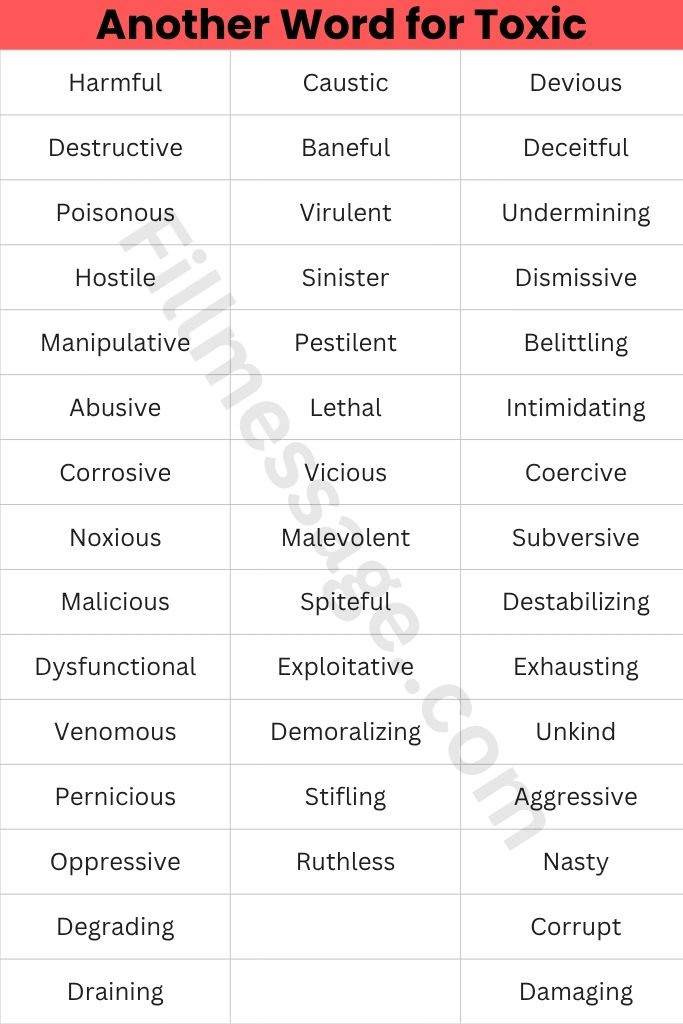
| Word | Tone | Best Used For |
| Harmful | Neutral, clear | General use, any context |
| Destructive | Serious, strong | Habits, behavior, relationships |
| Poisonous | Vivid, figurative | People, influence, environments |
| Hostile | Direct, formal | Workplaces, attitudes |
| Manipulative | Precise, emotional | People, behavior |
| Abusive | Heavy, serious | Treatment, relationships |
| Corrosive | Figurative, powerful | Culture, language, long-term damage |
| Noxious | Clinical, formal | Environments, substances, influence |
| Malicious | Intentional, strong | Actions, people |
| Dysfunctional | Calm, analytical | Systems, relationships |
| Venomous | Sharp, vivid | Words, personality, attacks |
| Pernicious | Scholarly, formal | Hidden or slow harm |
| Oppressive | Social, emotional | Power dynamics, workplaces |
| Degrading | Emotional, serious | Language, treatment |
| Draining | Casual, relatable | People, emotional energy |
| Controlling | Specific, behavioral | Relationships, people |
| Cruel | Simple, honest | Behavior, personality |
| Bitter | Descriptive, emotional | Attitude, tone, outlook |
| Corruptive | Moral, strong | Influence, environments |
| Suffocating | Figurative, vivid | Relationships, atmospheres |
| Caustic | Sharp, cutting | Speech, wit, criticism |
| Baneful | Literary, formal | Deep or lasting harm |
| Virulent | Spreading, aggressive | Ideas, attitudes, behavior |
| Sinister | Ominous, dark | Hidden intent, environments |
| Pestilent | Spreading widely | Influence, attitudes |
| Lethal | Extreme, serious | Figurative severe harm |
| Vicious | Strong, aggressive | Attacks, behavior, people |
| Malevolent | Intentional evil | Deeply harmful intent |
| Spiteful | Petty, deliberate | Actions done to hurt |
| Exploitative | Specific, serious | Relationships, workplaces |
| Demoralizing | Emotional, workplace | Leadership, culture |
| Stifling | Figurative, clear | Creativity, growth, expression |
| Ruthless | Cold, calculating | People, decisions, competition |
| Devious | Sneaky, sly | Plans, people, behavior |
| Deceitful | Dishonest, strong | People, patterns |
| Undermining | Subtle, specific | Confidence, authority, trust |
| Dismissive | Specific, emotional | Behavior, attitude |
| Belittling | Precise, painful | Language, treatment |
| Intimidating | Fear-based | People, environments |
| Coercive | Formal, legal | Relationships, workplaces |
| Subversive | Subtle, political | Influence, tactics |
| Destabilizing | Analytical, serious | Systems, people, relationships |
| Exhausting | Casual, honest | People, dynamics |
| Unkind | Gentle, mild | Soft criticism, general use |
| Aggressive | Behavioral, clear | Actions, tone, people |
| Nasty | Informal, blunt | Casual speech, attitude |
| Corrupt | Moral, strong | Systems, people, power |
| Damaging | Neutral, broad | Long-term effects, any context |
| Injurious | Formal, legal | Formal writing, legal contexts |
| Pestiferous | Rare, literary | Strong figurative harm |
Another Word for Toxic by Situation
The best replacement word depends on what you are actually describing. Here is how to match word to situation.
Another Word For a Toxic Person
What does this person actually do? That question leads you to the right word faster than any list.
- They twist situations and blame others: manipulative
- They enjoy seeing others fail: malicious or malevolent
- They constantly put people down: belittling or cruel
- They take and never give: exploitative or selfish
- They leave everyone feeling worse: draining or exhausting
- They use fear to control: intimidating or coercive
Examples in sentences:
“He has a manipulative way of making every problem someone else’s fault.”
“She is genuinely cruel to people she thinks cannot fight back.”
“After every conversation with him, I felt completely drained.”
Each of these is more useful than “toxic person” because it tells you something specific about the behavior.
Another Word For Toxic Behavior
Behavior has edges. Name the edge.
- Shutting down someone’s feelings: dismissive
- Slowly chipping away at confidence: undermining or corrosive
- Making someone feel worthless: degrading or belittling
- Using pressure to get what they want: coercive or controlling
- Acting kind in public, harmful in private: devious or deceitful
Another Word For a Toxic Relationship
The word you choose here should reflect how the relationship actually feels from the inside.
- Things are off but not extreme: unhealthy or dysfunctional
- One person is clearly losing themselves: destructive or suffocating
- There is a real power imbalance with harm: abusive or oppressive
- It feels like there is no way out: controlling or coercive
Note on “abusive”: this word carries serious weight. Use it when it truly fits. Using it casually for relationships that are simply difficult can minimize what genuine abuse means.
Another Word For a Toxic Work Environment
Workplace language needs to be precise, especially in formal writing or HR situations.
- General bad atmosphere: hostile or demoralizing
- Leadership crushes initiative: oppressive or stifling
- Slow cultural rot over time: corrosive
- Fear-based management: intimidating or coercive
- Ethics are ignored or punished: corrupt or corruptive
Tone Intensity Ladder
Where does your situation fall? Pick your word accordingly.
Mild: draining, unkind, dismissive, stressful, stifling
Moderate: hostile, controlling, harmful, dysfunctional, undermining
Strong: destructive, abusive, manipulative, corrosive, oppressive
Most intense: malicious, malevolent, vicious, venomous, virulent
This ladder matters because choosing a word stronger than the situation deserves makes readers question your judgment. Choosing a word weaker than the situation makes them underestimate it.
Another Word for Toxic Sentence Rewrites
Original: “He is a toxic person.”
- Casual: “He is draining to be around and leaves everything worse than he found it.”
- Formal: “His behavior consistently undermines and demoralizes those around him.”
- Creative: “Every room felt slightly smaller after he walked in.”
Original: “It was a toxic relationship.”
- Casual: “It was unhealthy for both of them and had been for a long time.”
- Formal: “The relationship had become destructive and emotionally coercive over time.”
- Creative: “Staying felt like slowly forgetting who she was before she met him.”
Original: “The workplace was toxic.”
- Casual: “Nobody wanted to show up. The culture was demoralizing.”
- Formal: “The organization demonstrated a hostile and oppressive internal culture.”
- Creative: “The office had its own weather, and it was always gray.”
Another Word for Toxic Formal vs. Informal: Which Words Fit Where
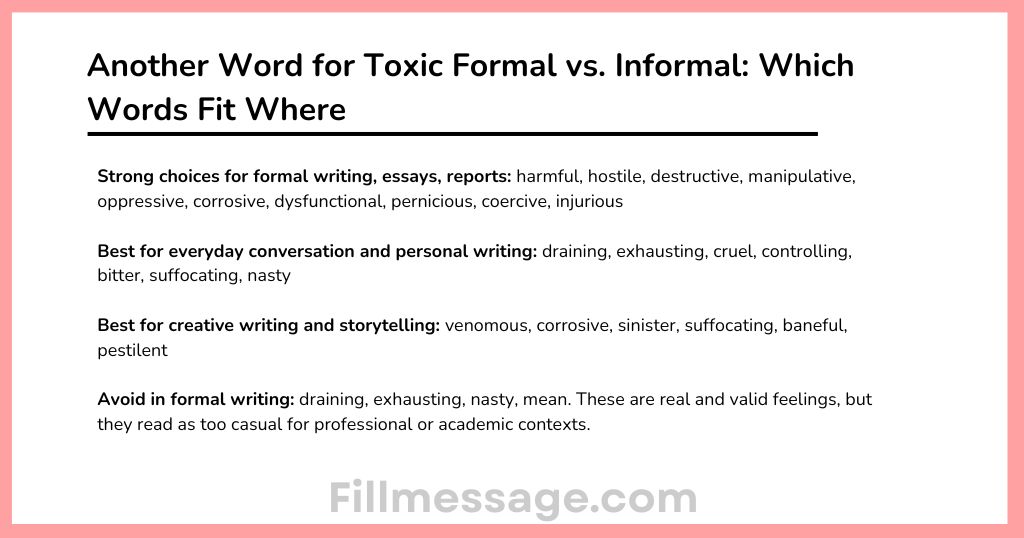
Strong choices for formal writing, essays, reports: harmful, hostile, destructive, manipulative, oppressive, corrosive, dysfunctional, pernicious, coercive, injurious
Best for everyday conversation and personal writing: draining, exhausting, cruel, controlling, bitter, suffocating, nasty
Best for creative writing and storytelling: venomous, corrosive, sinister, suffocating, baneful, pestilent
Avoid in formal writing: draining, exhausting, nasty, mean. These are real and valid feelings, but they read as too casual for professional or academic contexts.
Common Mistakes When Replacing “Toxic”
Treating all synonyms as equal. Venomous and hostile both sound strong, but they describe very different things. Venomous is sharp and deliberate, like a cutting remark. Hostile describes a general cold attitude. They do not swap.
Reaching for the heaviest word available. If the evidence in your writing does not match the word you chose, readers feel that gap. A difficult colleague is not automatically malevolent. A hard relationship is not automatically abusive.
Overusing emotional words. When every person in a piece is “manipulative” and every situation is “corrosive,” the words lose weight fast. Use strong words carefully so they stay powerful.
Using pernicious or baneful in casual writing. These are real, useful words in the right setting. In a text message or casual blog post, they read as forced and unnatural.
Another Word for Toxic Related Words Worth Knowing
Caustic: Cutting and sharp, usually applied to speech or humor. “His caustic remarks ended the conversation.” More specific than toxic. It almost always refers to words, not overall behavior.
Virulent: Originally medical, meaning spreading aggressively. Now used for ideas or attitudes that spread fast and cause real damage. “A virulent attitude that spread through the whole team.”
Baneful: A literary word meaning deeply harmful, often with long-lasting effects. Appears more in fiction and formal writing than everyday speech.
Pestiferous: Rare but useful in creative writing. It means causing harm while spreading widely, like a disease. Strong imagery without being overused.
Corruptive: Implies moral damage that creeps in slowly. Different from corrupt, which describes a current state. Corruptive describes the process of becoming corrupt.
Destabilizing: Specifically useful when describing someone or something that disrupts balance in a system, team, or relationship without necessarily intending harm.
Opposite Words for Toxic
Knowing the antonym helps you frame contrast in your writing.
For a person: supportive, encouraging, empowering, kind
For a relationship: healthy, nurturing, balanced, stable, safe
For an environment: positive, collaborative, welcoming, constructive
Slang and Informal Alternatives
These show up in casual conversation and online writing, so it helps to recognize them even if you would not use them in formal work.
- Energy vampire: Someone who emotionally drains everyone around them
- Bad news: Informal shorthand for a harmful person or situation
- Poison pill: Something that seems fine at first but causes harm once it is in place
- Dead weight: Someone who holds others back while contributing nothing
- Nightmare: Informal, used loosely for very difficult people or situations
Read also:
Another Word for Forever: 43+ Alternatives That Actually Fit Your Writing
46+ Another Word for Division: Right Word, Right Place
Frequently Asked Questions
Q: What is a polite way to describe a toxic person without direct accusation?
Words like “draining,” “difficult to be around,” or “emotionally exhausting” describe your experience rather than labeling the person. This is useful in sensitive conversations where you want to be honest without being confrontational.
Q: What is the difference between harmful and destructive?
Harmful covers a wide range and can be mild or serious. Destructive implies that something significant has been broken or is actively being broken. A harsh comment can be harmful. A pattern of years of behavior is destructive.
Q: When should I use abusive instead of other synonyms?
Only when the situation genuinely fits. Abuse involves a pattern of behavior intended to control, harm, or demean. Using it loosely for situations that are simply unpleasant weakens the word and can unintentionally minimize real experiences.
Q: Is “toxic” ever still the right word to use?
Yes. In casual conversation, content writing for general audiences, or when you need a widely understood shorthand, toxic works fine. The problem is not the word itself. It is using it as a substitute for thinking more precisely about what you actually mean.
Choosing the Right Word
Before you write, ask yourself one question: what does the harm actually look like?
Is it deliberate or accidental? Slow or sudden? Emotional or physical? Hidden or obvious?
That answer usually points you to the right word faster than scrolling through any list. The 47+ synonyms above give you the vocabulary. Your understanding of the specific situation is what makes them work.
One precise word will always do more than three vague ones.

Marco Jr. is Author at fillmassage.com,
He explores the world of words and their meanings, helping readers understand language clearly. Passionate about explanations that guide and inform, he creates insightful content that educates, engages, and supports curious minds every day.