Finding Another Word for Home is not as simple as swapping one word for another. The right choice depends on whether you mean a house, a feeling of comfort, your hometown, or even an animal’s living place.
This guide explains each option in plain English, so you can choose words that match your meaning, improve your writing, and sound natural in stories, essays, conversations, and everyday use.
What Makes “Home” So Hard to Replace
Most words have one core meaning. “Home” has at least five:
- A physical structure where someone lives
- An emotional feeling of comfort and belonging
- A place of origin or cultural identity
- A family setting or domestic life
- A natural habitat for animals or plants
No single word covers all five. That’s why choosing the wrong synonym can quietly shift the entire tone of your sentence without you noticing.
41+ Another Word for Home: Full Synonym Table
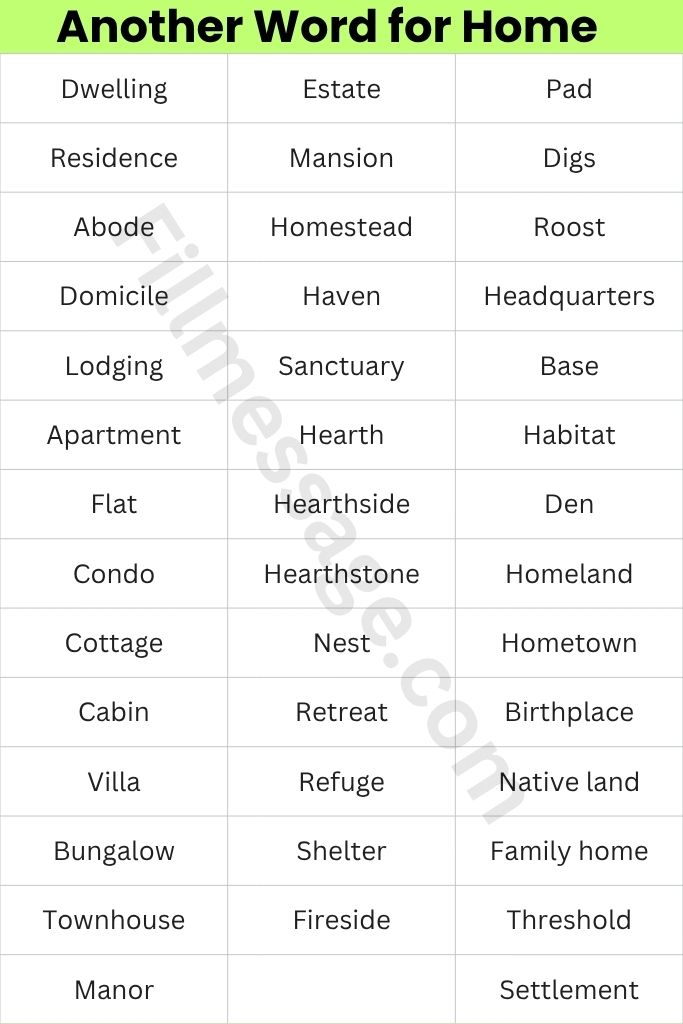
| Word | Tone | Best Used When |
| Dwelling | Neutral | Plain description of where someone lives |
| Residence | Formal | Legal, professional, or official writing |
| Abode | Literary/warm | Old-fashioned charm in creative writing |
| Domicile | Legal/technical | Strictly legal or official documents |
| Lodging | Practical | Temporary stays, travel writing |
| Apartment | Specific/neutral | Urban residential writing |
| Flat | British/neutral | British English contexts |
| Condo | Modern/neutral | Contemporary housing description |
| Cottage | Warm/cozy | Rural or small-home settings |
| Cabin | Rustic/warm | Woodland or countryside settings |
| Villa | Elevated/neutral | Larger, comfortable properties |
| Bungalow | Specific/neutral | Single-story home descriptions |
| Townhouse | Specific/neutral | Multi-level urban homes |
| Manor | Grand/formal | Period fiction, historical writing |
| Estate | Grand/formal | Large properties, formal description |
| Mansion | Formal/impressive | Large luxurious properties |
| Homestead | Traditional | Family land or generational property |
| Haven | Warm/emotional | Emphasizing safety and comfort |
| Sanctuary | Elevated/calm | Deep personal or spiritual peace |
| Hearth | Poetic/warm | Family warmth and tradition |
| Hearthside | Poetic | Gathering, togetherness, domestic warmth |
| Hearthstone | Literary/rare | Formal tributes, poetry, deep sentiment |
| Nest | Cozy/intimate | Personal essays, parenting, small spaces |
| Retreat | Calm/private | Peaceful escape, private space |
| Refuge | Protective/neutral | Safety from hardship or danger |
| Shelter | Stripped-back | Survival, vulnerability, basic protection |
| Fireside | Warm/visual | Imagery of warmth and domestic comfort |
| Pad | Casual/slang | Everyday speech, lighthearted writing |
| Digs | Informal/slang | Casual conversation, dialogue |
| Roost | Informal | Settling into a personal space informally |
| Headquarters | Neutral/practical | Base of operations, informal or formal |
| Base | Neutral/practical | Operational or everyday informal use |
| Habitat | Scientific | Animals, ecology, nature writing |
| Den | Specific | Animals or informal cozy personal spaces |
| Homeland | Identity/cultural | Culture, origin, displacement, belonging |
| Hometown | Light/personal | The city or town someone grew up in |
| Birthplace | Factual/origin | Where someone was born, biographical writing |
| Native land | Cultural/origin | Place of cultural or geographic origin |
| Family home | Warm/specific | Writing about generational or family ties |
| Threshold | Poetic/symbolic | The act of arriving or leaving home |
| Abode | Warm/traditional | Literary warmth, old-fashioned charm |
| Settlement | Historical/neutral | Early communities, historical or geographic context |
Grouped by Meaning: Which Word Fits Which Version of “Home”
Synonym for Home: The Physical Place
When you mean a building or address, you want a word that’s clean and structural.
Dwelling is the most neutral option in this group. No emotion attached, no size implied. It simply means a place where someone lives. It sits comfortably in both formal and creative writing without pulling attention to itself.
Residence is a step more official. It belongs in professional bios, legal forms, and formal writing. It creates deliberate distance. You wouldn’t write “I love my residence” in a heartfelt letter. But on a job application or in a legal document, it’s exactly right.
Domicile goes further into legal territory. Outside a courtroom or a contract, it sounds unnatural. Use it only when legal precision is the point.
Apartment, cottage, cabin, villa, bungalow, townhouse, mansion, manor, estate are all specific physical types. Each one implies size, setting, and atmosphere. If the type of building matters to your writing, these beat the generic “home” every time because they show rather than tell.
Another Word for The Emotional Home
This is the meaning most writers are reaching for when they feel “home” isn’t doing enough.
Haven is one of the strongest words in this cluster. It means a place where someone feels genuinely protected and at ease, not just present. It adds warmth without going overboard. Works well in personal writing, lifestyle content, and storytelling.
Sanctuary takes the emotional weight further. It suggests a space that’s quietly intentional, a place someone has chosen for peace. The word carries stillness. Use it once in a piece and let it breathe. Overuse kills it.
Nest is smaller and cozier than both. It implies something personally arranged and intimate. It’s never formal, but it consistently delivers warmth. Writers reach for it when describing a beloved apartment, a nursery, a reading corner.
Retreat shifts the emphasis to privacy. It’s less about warmth and more about stepping back from the world. A weekend cabin, a countryside property, a studio where someone goes to think. The feeling of retreat is earned quiet, not default comfort.
Hearth is old and deliberate. It comes from the fireplace that once anchored family homes. When you use it today, you’re invoking tradition, warmth, and gathering. It belongs in literary essays, speeches, and family tributes.
Shelter strips everything back. It names the most basic function of a home: protection. Use it when vulnerability or survival is the emotional undertone.
Another Word for Home Origin and Identity
These words connect home to where someone comes from, not just where they live now.
Homeland is loaded with meaning. Cultural identity, displacement, loss, pride, it carries all of it. Use it when the emotional or political weight is intentional. It’s never casual.
Hometown is lighter and more conversational. It means the city or town where someone grew up. It works in travel writing, personal essays, and everyday storytelling without adding complexity unless you want it.
Birthplace is the most specific and factual. It pinpoints where someone was born. Biographies and historical writing use it cleanly. It doesn’t carry the cultural heaviness of homeland, but it anchors identity to a real point on a map.
Native land sits between the two. It refers to a place of geographic or cultural origin and can carry different emotional weight depending on context. Use it thoughtfully.
Another Word for Animal and Natural Habitats Home
A category most synonym lists barely touch, but it matters.
Habitat is the correct word for any animal’s home in scientific or environmental writing. It describes the natural environment where a species lives and survives. Using “home” in place of habitat is fine in casual writing, but habitat is always cleaner in anything serious.
Den, nest, burrow, roost are specific animal homes. Each one describes a different kind of creature and environment. If you know what animal you’re writing about, the specific word always beats the general one.
Beautiful and Poetic Words for Home
Some writers aren’t looking for a neutral swap. They want language that lifts the writing.
Hearthside is one of the most underused beautiful words available. It doesn’t just name a place. It names a feeling, the warmth of gathering with people you love in a familiar space.
Threshold isn’t a synonym exactly, but it’s one of the most powerful images connected to home. It marks the crossing point between outside and inside, between belonging and not belonging. Poets use it to describe the act of coming home more than the physical place itself.
Fireside is visual and warm. It conjures a scene rather than just a location. Easier to picture than hearth, and slightly more accessible to modern readers.
Hearthstone is rare and carries real weight when used carefully. It refers to the flat stone of an old family fireplace, the literal anchor of the house. In a family tribute, a wedding speech, or a poem, it lands with quiet depth.
Abode, despite feeling old-fashioned, has genuine warmth when used sparingly. It has a softness that residence never will and a quieter charm than haven.
Another Word for Home in Sentence Rewrites: Watch the Tone Shift
Original: She came home after years away.
- Formal: She returned to her permanent residence after an extended absence.
- Emotional: She finally found her way back to the only place that had ever felt like shelter.
- Poetic: After years of wandering, she stepped across her own threshold again.
- Casual: She made it back to her hometown after all that time.
Each version changes the feeling of the sentence, not just the word.
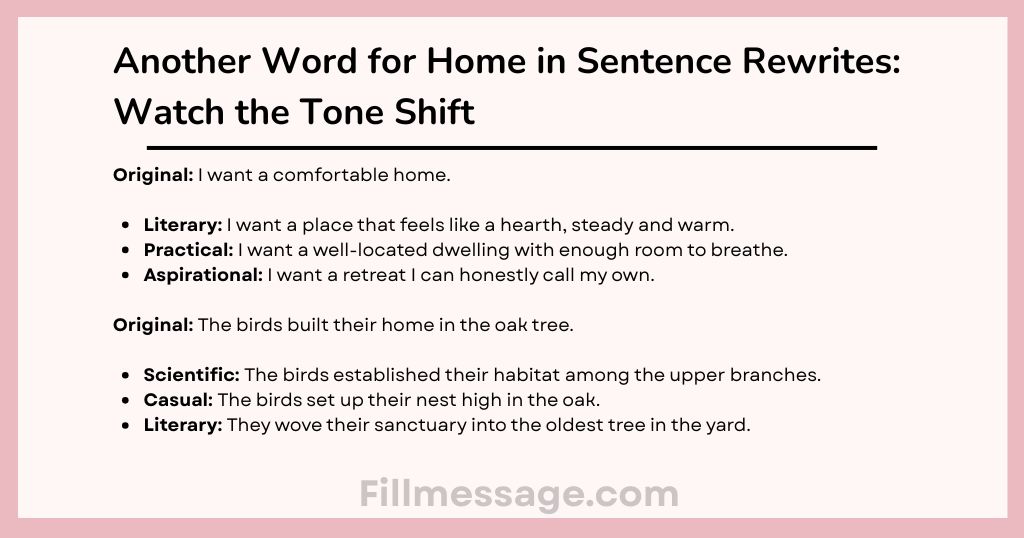
Original: I want a comfortable home.
- Literary: I want a place that feels like a hearth, steady and warm.
- Practical: I want a well-located dwelling with enough room to breathe.
- Aspirational: I want a retreat I can honestly call my own.
Original: The birds built their home in the oak tree.
- Scientific: The birds established their habitat among the upper branches.
- Casual: The birds set up their nest high in the oak.
- Literary: They wove their sanctuary into the oldest tree in the yard.
Another Word for Home Formal vs. Informal: Which Word for Which Context
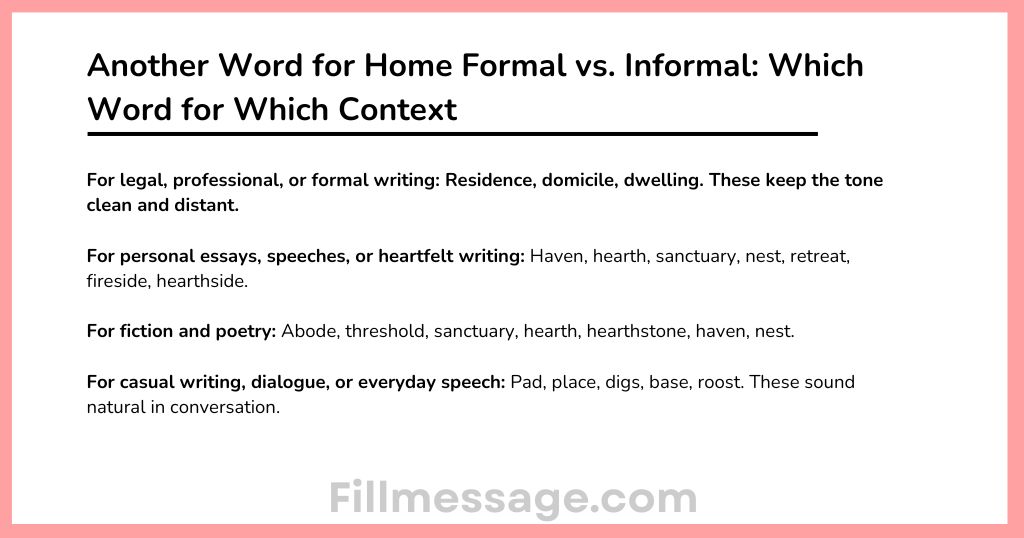
For legal, professional, or formal writing: Residence, domicile, dwelling. These keep the tone clean and distant. Avoid nest, pad, digs, or roost entirely in these settings.
For personal essays, speeches, or heartfelt writing: Haven, hearth, sanctuary, nest, retreat, fireside, hearthside. These carry the emotional temperature that formal words can’t.
For fiction and poetry: Abode, threshold, sanctuary, hearth, hearthstone, haven, nest. Choose based on the emotional temperature of your scene, not just the setting.
For casual writing, dialogue, or everyday speech: Pad, place, digs, base, roost. These sound natural in conversation. Using “residence” in dialogue makes a character sound deliberately stiff unless that’s the effect you want.
Common Mistakes to Avoid about Home Synonym
Picking “dwelling” for emotional writing. It’s too flat. If someone just lost their home, “dwelling” feels clinical. The word strips out all the feeling.
Using “haven” for a place that isn’t comforting. Haven implies safety and warmth. Don’t attach it to a space someone finds difficult or unwelcoming.
Mixing up “homeland” and “hometown.” Hometown is casual and geographic. Homeland carries cultural identity, often tied to history or loss. Swapping them changes the emotional register of your entire sentence.
Applying “habitat” to people carelessly. In most contexts it sounds dehumanizing. Some writers use it deliberately for ironic distance, but that’s a deliberate literary choice, not a neutral swap.
Overworking “sanctuary.” It’s a strong word. One use per piece is enough. If you reach for it too often, it loses all its weight.
Home Synonym Related Words Worth Knowing
Belonging describes what a good home creates. Writers exploring the emotional side of home naturally reach for this word when they want to describe the feeling rather than the place.
Roots refers to a person’s connection to their place of origin. It implies depth, history, and identity. It often appears alongside homeland and hometown in writing about culture or personal history.
Threshold marks the boundary between inside and outside, between familiar and unknown. Especially useful in stories about leaving home or returning to it after a long time.
Shelter is the stripped-back version. It names protection without warmth. Use it when the point is survival, vulnerability, or basic human need rather than comfort.
Read also:
38+ Another Word for Integrity: Choose the Right Synonym for Every Context
38+ Another Word for Access: Pick the Right Word Every Time
FAQ’s about Another Word for Home
Is “abode” too old-fashioned to use?
In speech, yes. In writing, no. It has a quiet warmth that modern words often lack. Use it with intention and it still works well, especially in literary or reflective pieces.
What’s the real difference between haven and sanctuary?
Haven feels personal and warm, a place where someone naturally feels safe. Sanctuary feels quieter and more deliberate, a space someone has chosen or protected for peace. Haven leans emotional. Sanctuary leans intentional. There’s overlap, but the distinction matters in careful writing.
Can habitat ever describe a person’s home?
Rarely and only when the effect is deliberate. Some writers use it to create ironic distance or to comment on how a person lives. Used carelessly, it reads as cold or dehumanizing.
Which word works best for poetic writing about home?
It depends on what layer of home you’re writing about. Warmth and family: hearth. Safety: haven. Deep personal attachment: sanctuary. Cultural origin: homeland. The act of arriving: threshold.
Choosing the Right Word
Before you replace “home,” ask yourself one question: what am I actually describing?
A building needs dwelling or residence. A feeling of safety needs haven or sanctuary. A family setting needs hearth or nest. An origin story needs homeland or hometown. An animal’s territory needs habitat.
Get the meaning right first. The word will follow.

Marco Jr. is Author at fillmassage.com,
He explores the world of words and their meanings, helping readers understand language clearly. Passionate about explanations that guide and inform, he creates insightful content that educates, engages, and supports curious minds every day.