You already know the word. But something feels off. Maybe it’s too blunt for the context. Maybe it doesn’t carry enough weight. Or maybe you’ve written it three times in the same paragraph and it’s starting to sound lazy.
“Self-centered” works. But it doesn’t always work well. The right synonym changes the entire feeling of a sentence — who the person sounds like, how serious the behavior appears, and how the reader responds emotionally.
Here are 26 alternatives, organized so you can actually use them.
What “Self-Centered” Really Means
Someone self-centered consistently puts their own needs, feelings, and interests above everyone else’s. It’s a character pattern, not just a bad day. The word carries negative weight but sits at medium intensity — not a throwaway insult, not a clinical diagnosis. That middle position is exactly why writers need a fuller range of options around it.
The 26 Another Word for Self-Centered: Quick-Access Table
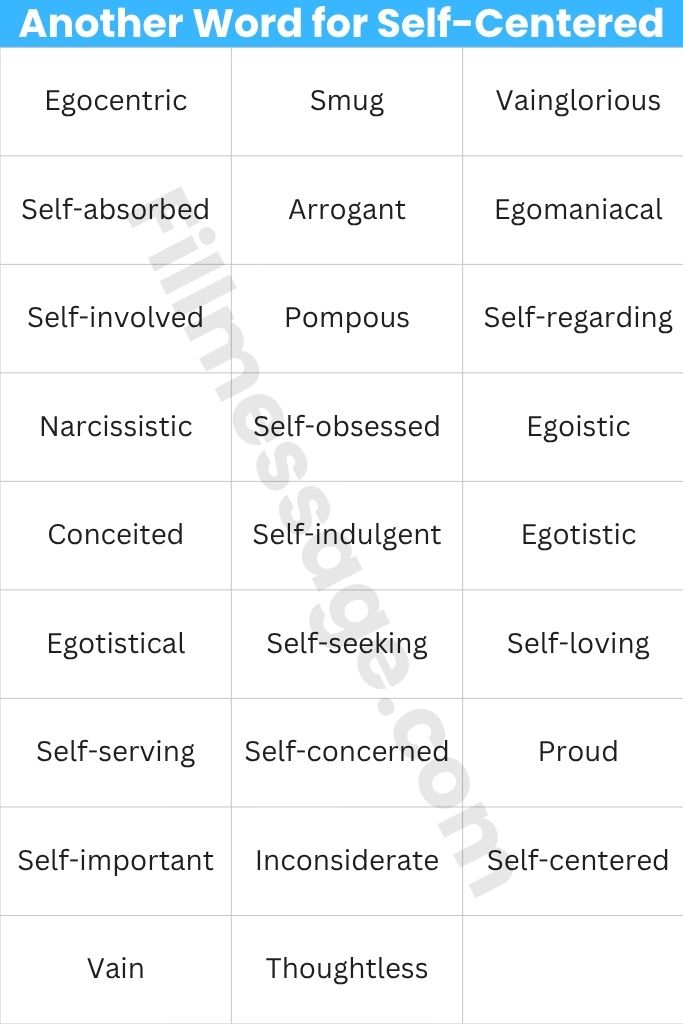
| Word | Tone | Best Used When |
| Egocentric | Neutral/formal | Analyzing behavior, essays, psychology |
| Self-absorbed | Mild negative | Relationships, personal writing |
| Self-involved | Gentle criticism | Everyday speech, casual fiction |
| Narcissistic | Strong/clinical | Serious criticism, character study |
| Conceited | Casual criticism | Pride in ability or appearance |
| Egotistical | Formal criticism | Professional or analytical writing |
| Self-serving | Behavior-focused | Workplace, motives, decisions |
| Self-important | Slightly mocking | Social behavior, humor writing |
| Vain | Appearance-linked | Beauty, image, social commentary |
| Smug | Attitude-specific | Reactions, tone, conversations |
| Arrogant | Strong/negative | Authority figures, power dynamics |
| Pompous | Mocking | Speeches, formal settings, satire |
| Self-obsessed | Informal/strong | Casual writing, social commentary |
| Self-indulgent | Behavior-focused | Habits, lifestyle, artistic criticism |
| Self-seeking | Motive-based | Politics, ambition, calculated behavior |
| Self-concerned | Mild/neutral | Internal thoughts, anxiety, insecurity |
| Inconsiderate | Behavior-based | Actions that ignore others |
| Thoughtless | Unintentional feel | Careless, spontaneous behavior |
| Vainglorious | Literary/formal | Historical fiction, formal prose |
| Egomaniacal | Extreme | Irrational or destructive self-focus |
| Self-regarding | Formal/rare | Philosophy, academic writing |
| Egoistic | Formal | Ethics, philosophical discussion |
| Egotistic | Semi-formal | General writing, mild formal tone |
| Self-loving | Context-dependent | Self-help, therapy language, psychology |
| Proud | Dual meaning | Positive achievement or negative excess |
| Self-centered | Base word | When clarity beats precision |
Self-Centered Synonyms Meaning Groups: Where Each Word Actually Belongs
Lumping all 26 together would be useless. They split into natural clusters based on what they actually describe.
Group 1 — The Personality Pattern Words
These describe who someone is, not just what they did once.
Egocentric (1) carries a psychological edge. It suggests someone genuinely cannot process the world except through their own experience. Not dramatic. Precise. Works well in essays, character analysis, or any writing that needs clinical distance.
Self-absorbed (2) is warmer in tone but still critical. This person isn’t malicious — they’re just deeply wrapped up in their own thoughts and feelings. Good for relationship writing or fiction where the character has some likability despite the flaw.
Self-involved (3) sits even softer. It implies someone temporarily or habitually lost in their own concerns. Less permanent-sounding than egocentric. Use this when you want to criticize without fully condemning.
Narcissistic (4) is the heaviest word in this group. It implies emotional manipulation, a hunger for admiration, and often an inability to recognize others as fully human. Use it carefully. Calling someone narcissistic in casual writing can feel like overreach unless the behavior truly justifies it.
Egomaniacal (20) is narcissistic turned up to an extreme. Reserved for characters or real situations where self-obsession has become irrational, destructive, or almost theatrical.
Self-obsessed (13) lands between narcissistic and self-absorbed in everyday usage. Informal, punchy, and modern. Works well in social commentary or casual fiction.
Group 2 — The Attitude and Pride Words
These focus on how someone carries themselves, not just what they think privately.
Conceited (5) is about inflated pride, especially regarding abilities or looks. The conceited person thinks they’re simply better than others — and it shows in how they act. Casual enough for everyday writing, pointed enough to sting.
Arrogant (11) goes a step further. Arrogance isn’t just self-admiration — it involves contempt for others. The arrogant person looks down. That’s the key difference from conceited. Important distinction if you want precision.
Pompous (12) is about presentation. How someone talks, holds themselves, or performs their own importance. A pompous speech is full of self-congratulation. A pompous person treats every room like a stage. Great for satire and character writing.
Smug (10) is quieter. It’s the face someone makes when they already know they’ve won, the tone in someone’s voice when they think they’re above explaining themselves. Harder to describe but instantly recognizable.
Self-important (8) suggests someone acting as though they matter far more than they do. There’s a slight absurdity to it — useful when you want the reader to find the character a little ridiculous.
Vainglorious (19) is the old-fashioned cousin of vain. Boastful pride about personal achievements. More literary, slightly archaic. Perfect in historical fiction or when writing in a formal voice.
Proud (25) is the only word on this list that swings both ways. Pride in a real accomplishment is positive. Excessive, unearned pride crosses into the self-centered territory. Context carries everything with this one.
Group 3 — The Behavior and Motive Words
These aren’t about character or attitude — they describe specific actions and why someone does them.
Self-serving (7) is the most precise workplace word here. It targets motive directly. A decision can be self-serving even if the person making it isn’t generally self-centered. Someone can appear helpful while still acting self-servingly — that gap between appearance and motive is exactly what this word captures.
Self-seeking (15) is close but leans more toward ambition and strategy. A self-seeking politician. A self-seeking negotiation tactic. It implies deliberate pursuit of personal advantage over time, not just a single act.
Self-indulgent (14) focuses on personal pleasure over responsibility. It fits lifestyle descriptions, artistic criticism (“the film was self-indulgent”), and habitual choices that prioritize comfort.
Inconsiderate (17) pulls the focus onto impact on others. The person ignored someone else’s needs or feelings. It doesn’t say anything about why — just that they did. Useful when you want to criticize behavior without judging character wholesale.
Thoughtless (18) adds another layer: the absence of awareness. A thoughtless person didn’t mean harm — they simply didn’t stop to think. That makes it the gentlest word in this cluster. Don’t use it when the selfishness was deliberate.
Group 4 — The Appearance and Vanity Words
Vain (9) is almost exclusively about looks and the desire to be admired for them. Not intelligence, not power — just appearance. Sharp and specific. Works well in character sketches, social media commentary, or any context where image is central.
Self-loving (24) lives in two worlds. In therapy and self-care writing, it’s genuinely positive. But as a synonym for self-centered, it implies someone who prioritizes themselves so completely that others barely register. The tone shifts depending entirely on context.
Group 5 — The Formal and Academic Words
These are less common in casual writing but essential in analytical or philosophical contexts.
Egotistical (6) and egotistic (23) are near-identical. Egotistical is slightly more formal. Both describe an inflated sense of one’s own importance. Egotistical fits essays and character analysis; egotistic works in general writing.
Egoistic (22) enters philosophical territory. It connects to ethical frameworks about self-interest as a guiding principle. Not a casual criticism — more of an analytical label.
Self-regarding (21) is the most academic term here. Used in philosophy and formal ethical discussion. Rarely appears in everyday writing, and for good reason — it sounds distant and technical.
Self-concerned (16) is milder and more neutral than most alternatives. It can describe someone overly focused on their own anxiety, insecurity, or wellbeing, not just pride. Good for psychological or introspective writing.
Self-Centered Synonyms Tone Ladder: From Soft to Sharp
If you need a fast reference for intensity:
Gentlest: thoughtless, self-involved, self-concerned, proud (excess)
Moderate: self-absorbed, conceited, self-important, vain, smug, self-indulgent
Strong: egocentric, egotistical, arrogant, self-serving, self-obsessed
Sharpest: narcissistic, pompous, egomaniacal, vainglorious
This ladder matters most in fiction. If a character starts as self-involved and gradually becomes narcissistic, your word choice across the story can reflect that arc — without stating it directly.
Read also: Another Word for Shaping: 49 Alternatives That Actually Fit Your Writing
Another Word for Self-Centered in Sentence Rewrites: Same Idea, Different Impact
Original: She was self-centered and hard to be around.
Formal/analytical: Her egocentric outlook made genuine connection with others nearly impossible.
Casual: She was so self-absorbed that a whole conversation could pass without her asking a single question about you.
Professional: Her self-serving approach consistently prioritized personal outcomes over team results.
Fiction/creative: There was a specific kind of exhaustion that came with being around her — the feeling of being furniture in someone else’s story.
Each version hits the same core behavior. But each one changes the reader’s relationship to it. Analytical distance. Personal familiarity. Professional frustration. Emotional fatigue. Word choice creates that difference.
Where Each Another Word for Self-Centered Works Best
Academic essays: egocentric, egoistic, self-regarding, egotistical
Professional writing: self-serving, inconsiderate, self-seeking
Fiction and storytelling: conceited, pompous, smug, vainglorious, self-absorbed, arrogant
Casual or informal writing: self-obsessed, self-involved, self-important, thoughtless
Psychology or self-help contexts: narcissistic, self-loving, self-concerned, egocentric
Avoid in formal writing: smug, pompous, egomaniacal, self-obsessed — these read as emotionally charged and undercut serious analysis.
Mistakes Worth Avoiding
Narcissistic as a casual insult. The word has real clinical weight. Using it to describe someone who just talks about themselves too much weakens its meaning and can feel unfair.
Arrogant vs. conceited. Conceited people admire themselves. Arrogant people look down on others. Related — but the direction of feeling is different.
Self-serving vs. selfish. Selfish means refusing to share or give. Self-serving means acting in a way that benefits you, even while appearing cooperative. Someone can be self-serving in a generous act if the real motive is personal gain.
Thoughtless as a strong criticism. It implies accident, not intent. If the behavior was deliberate, thoughtless lets the person off too easily.
Pompous vs. arrogant. Pompous is stylistic — how someone presents themselves. Arrogant is attitudinal — how someone feels about others. A pompous speech isn’t automatically arrogant. An arrogant person isn’t always pompous.
Related Another Word for Self-Centered That Often Come Up Nearby
Entitled — believes they deserve special treatment without earning it. Overlaps with self-centered but centers on expectations, not just attention-seeking.
Manipulative — uses others for personal benefit, deliberately. More calculated than self-absorbed. The difference is intention.
Dismissive — treats others’ feelings or opinions as unimportant. A self-centered person can be dismissive without noticing; a manipulative person uses it as a tactic.
Oblivious — simply unaware of how their behavior affects others. Key difference: oblivious people aren’t choosing to ignore others. They genuinely don’t register the impact.
Read more:
23 Another Word for Weight: Pick the Exact One You Need
The Bottom Line
The 26 words above aren’t interchangeable. They describe related but distinct things — personality versus behavior, intention versus habit, attitude versus impact. Before you swap one in, ask: am I describing what someone is, what they do, or what they believe about themselves? That question narrows the list fast.
Pick the word that says exactly what you mean. Not the most impressive one. The most precise one.

Marco Jr. is Author at fillmassage.com,
He explores the world of words and their meanings, helping readers understand language clearly. Passionate about explanations that guide and inform, he creates insightful content that educates, engages, and supports curious minds every day.