Blue pulls double duty in English. It names a color and describes a feeling, and that split causes real problems when you need a replacement. Write “the azure walls” when you meant something emotional, and the sentence falls flat. Write “melancholy” when someone just wanted a paint color, and the reader gets confused.
The word you pick depends entirely on what your blue is doing, not just on what feels poetic or interesting. This guide breaks down the best options for both uses so you can make a confident choice.
Best Another Word for Blue at a Glance
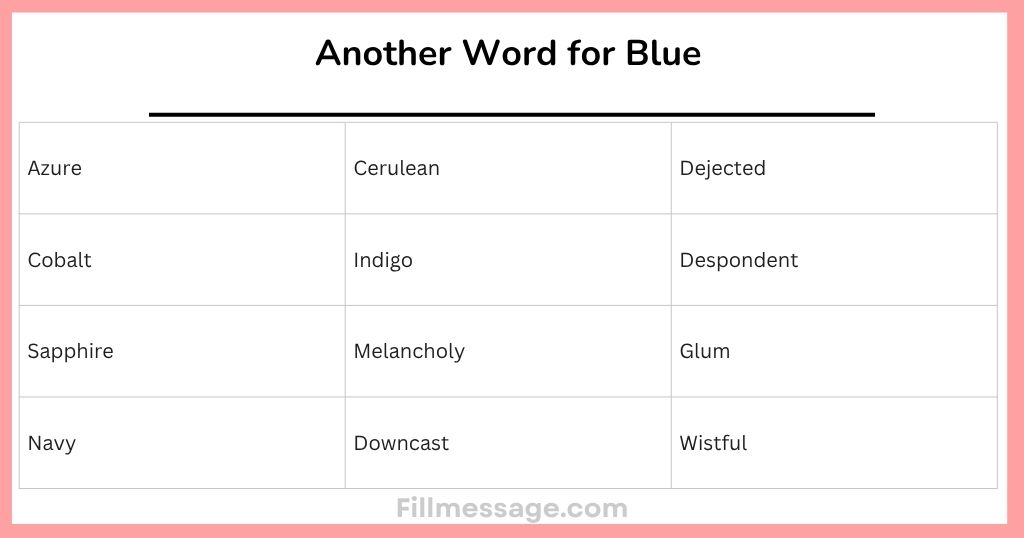
| Word | Best Use | Tone |
| Azure | Sky or vivid color | Literary, visual |
| Cobalt | Deep, rich color | Neutral to technical |
| Sapphire | Jewelry, deep blue | Elegant, descriptive |
| Navy | Dark blue, clothing | Neutral, everyday |
| Cerulean | Sky blue, poetic | Creative, formal |
| Indigo | Blue-violet shade | Neutral, precise |
| Melancholy | Sadness, mood | Emotional, literary |
| Downcast | Low mood, temporary | Casual, mild |
| Dejected | Feeling let down | Neutral to formal |
| Despondent | Deep sadness | Serious, strong |
| Glum | Low-key unhappy | Conversational |
| Wistful | Gentle sadness, longing | Soft, literary |
When Blue Means a Color
This is the literal use: sky, water, ink, fabric, paint. The substitutes here are specific shades, not interchangeable words. Pick the one that matches the exact hue you see.
Azure is a bright, pure blue, the kind you see on a cloudless summer day. It reads as slightly literary, which makes it work well in descriptive writing but feel overdressed in casual conversation.
The swimming pool glinted azure in the afternoon light.
Cerulean sits close to azure but reads as a softer, paler sky blue. Artists and designers use it often. It sounds more precise than “light blue” in creative or professional contexts.
She painted the bedroom walls cerulean to make the room feel open.
Cobalt is darker and more saturated, the bold blue of certain glazed pottery and glass bottles. It’s a practical word in design, art, and manufacturing.
The cobalt tiles gave the kitchen a sharp, clean look.
Sapphire calls to mind depth and richness. It works beautifully for describing water, gemstones, or any deep blue that carries a sense of value or beauty. It leans toward the elegant side.
She wore a sapphire scarf that caught everyone’s eye at dinner.
Navy is a dark, near-black blue associated with clothing and official uniforms. It’s neutral and widely understood. Use it when cobalt or sapphire would feel too dramatic.
He dressed in a navy jacket and grey trousers.
Indigo sits between blue and violet on the color spectrum. It’s a useful word when the blue you’re describing has a purple undertone. Designers and dye-makers reach for it regularly.
The sky at dusk turned a deep indigo before full darkness fell.
When Blue Means Sad or Low
Here the replacements get more interesting because they each capture a slightly different emotional state. Swapping them carelessly changes how a character or situation reads.
Melancholy is probably the richest substitute. It suggests a quiet, reflective sadness rather than sharp pain. It works well in writing about mood, memory, or atmosphere. It can describe both a person and a feeling.
There was a melancholy in the old photographs she couldn’t quite name.
Glum is casual and immediate. It describes someone who looks unhappy right now, usually about something minor. A glum character isn’t despairing; they’re just a bit sulky or flat.
He came home glum after losing the match.
Downcast suggests someone whose spirits have dropped, often after disappointment. It’s slightly more formal than glum and works well in narration.
She looked downcast when her name wasn’t called.
Dejected is a step stronger than downcast. It implies feeling defeated or rejected, not just disappointed. The word has a clear social cause built into it, often failure or rejection.
The team left the field dejected after the final whistle.
Despondent sits at the heavier end. It describes someone who has lost hope, not just had a bad day. Using it for a minor disappointment makes the sentence feel exaggerated.
After months of setbacks, she was genuinely despondent.
Wistful is different from the others because it mixes sadness with longing. It’s not about despair. It describes a gentle ache, usually for something in the past or something just out of reach. A wistful person isn’t suffering; they’re quietly missing something.
He stood at the window with a wistful expression, watching the old house one last time.
Where Writers Go Wrong about choosing Another Word for Blue
“Somber” for personal sadness — Somber usually describes atmosphere, tone, or mood of a place or event. A room can be somber; a funeral can be somber. Calling a person somber works occasionally but sounds slightly detached. Use dejected or downcast for people.
“Sad” as a lazy replacement — It’s not wrong, but it strips away everything interesting. If you’re replacing blue because you want more precision, sad gives you less, not more.
“Azure” in a casual sentence — Azure in dialogue or everyday writing sounds stiff. It belongs in description-heavy prose. “Her eyes were azure” works in a novel; it feels odd in a text message or a quick email.
“Depressed” when you mean blue — Depressed is a clinical word. In everyday use, people do say “I felt depressed,” but if you’re writing a character who’s simply having a rough week, dejected or despondent fits more naturally and avoids clinical connotations.
Color words used emotionally without signal — Saying someone felt “cobalt” or “cerulean” when you mean sad creates confusion unless you’re writing intentionally experimental prose. The color alternatives only work for the literal use.
Degree Differences at a Glance
If the emotional meaning is what you need, the words range from mild to heavy:
Wistful → Glum → Downcast → Melancholy → Dejected → Despondent
Wistful barely registers as unhappy. Despondent implies a loss of hope. Place your character or subject in the right spot on that range before choosing.
Quick Decision Guide on Another Word for Blue
Describing a shade of color?
Vivid and bright → azure, cerulean
Dark and rich → cobalt, sapphire, navy
Blue-purple → indigo
Describing a mood or feeling?
Gentle, reflective sadness → melancholy, wistful
Mild, visible unhappiness → glum, downcast
Disappointment, defeat → dejected
Deep or lasting sadness → despondent
Writing for a formal or professional context?
Color: cobalt, navy, cerulean
Emotion: melancholy, dejected, despondent
Writing for casual or conversational use?
Color: navy, dark blue
Emotion: glum, downcast, low
Read also:
Another Word for Out of Control: 28 Alternatives That Actually Fit
Another Word for In Turn: 35 Alternatives That Actually Work
The best replacement for blue is the one that tells the reader exactly what shade you see or exactly how far down someone’s mood has sunk. When you know which use you’re dealing with, color or emotion, the choice narrows quickly. Start there, and the right word usually becomes obvious.

Marco Jr. is Author at fillmassage.com,
He explores the world of words and their meanings, helping readers understand language clearly. Passionate about explanations that guide and inform, he creates insightful content that educates, engages, and supports curious minds every day.